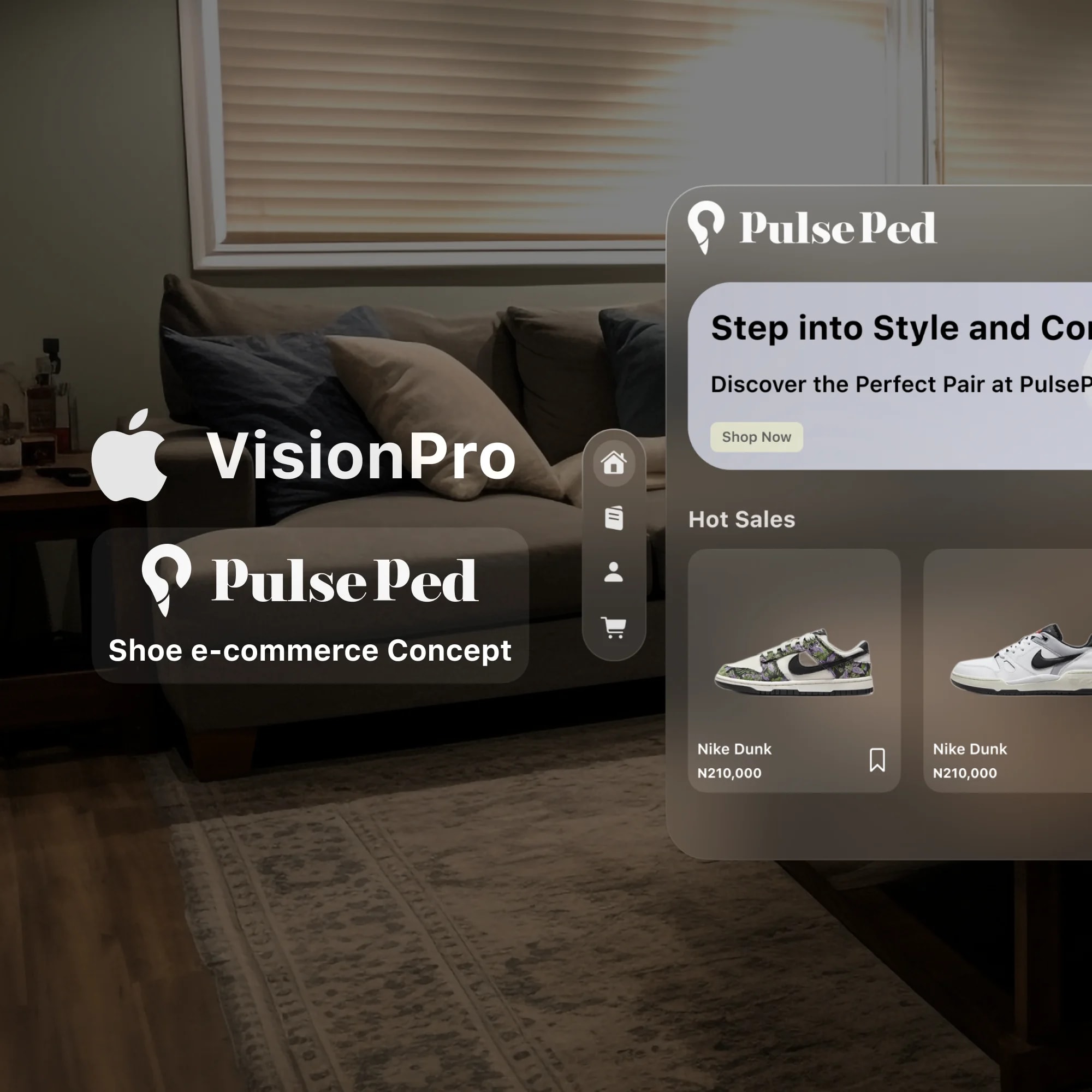
Vision Pro E-commerce Concept
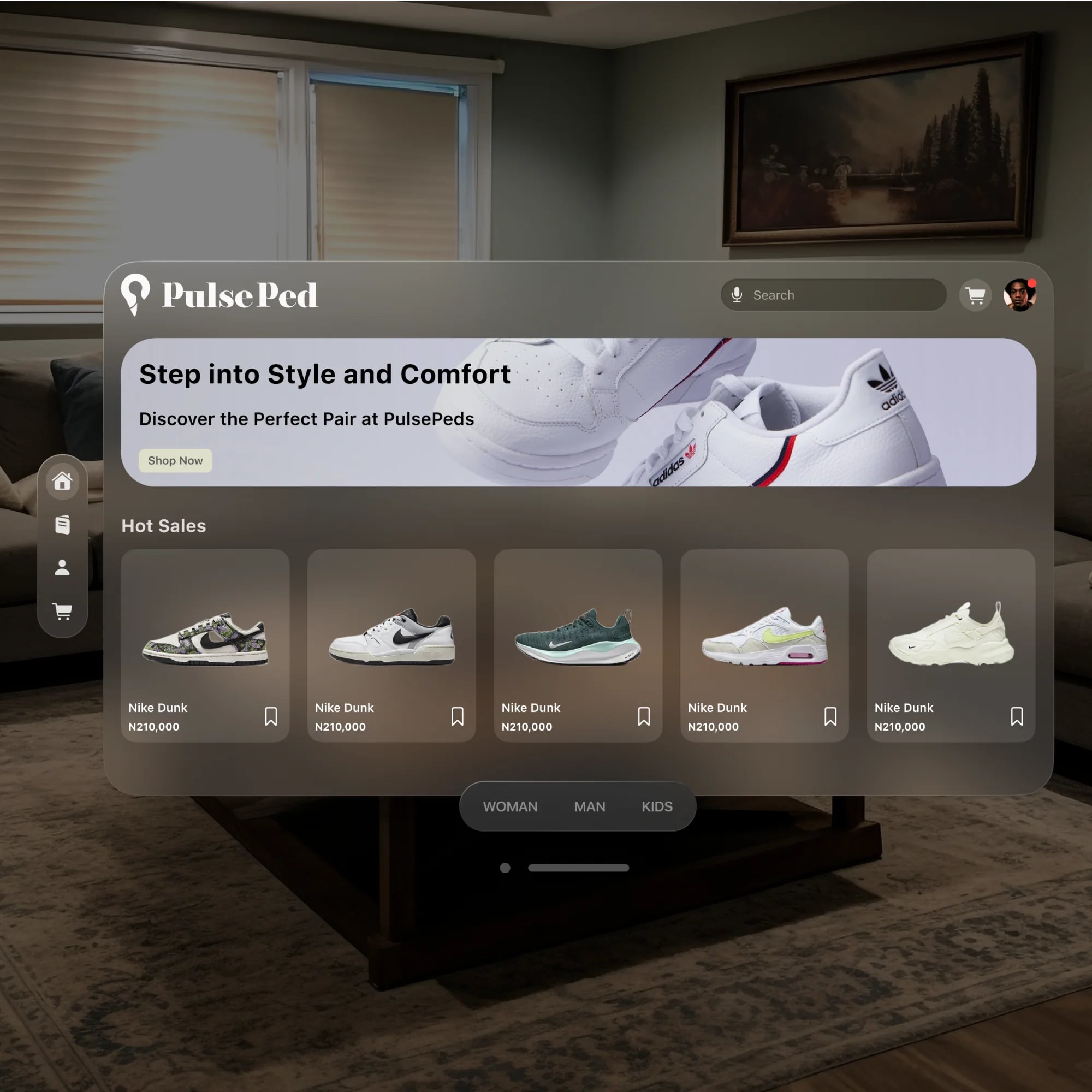
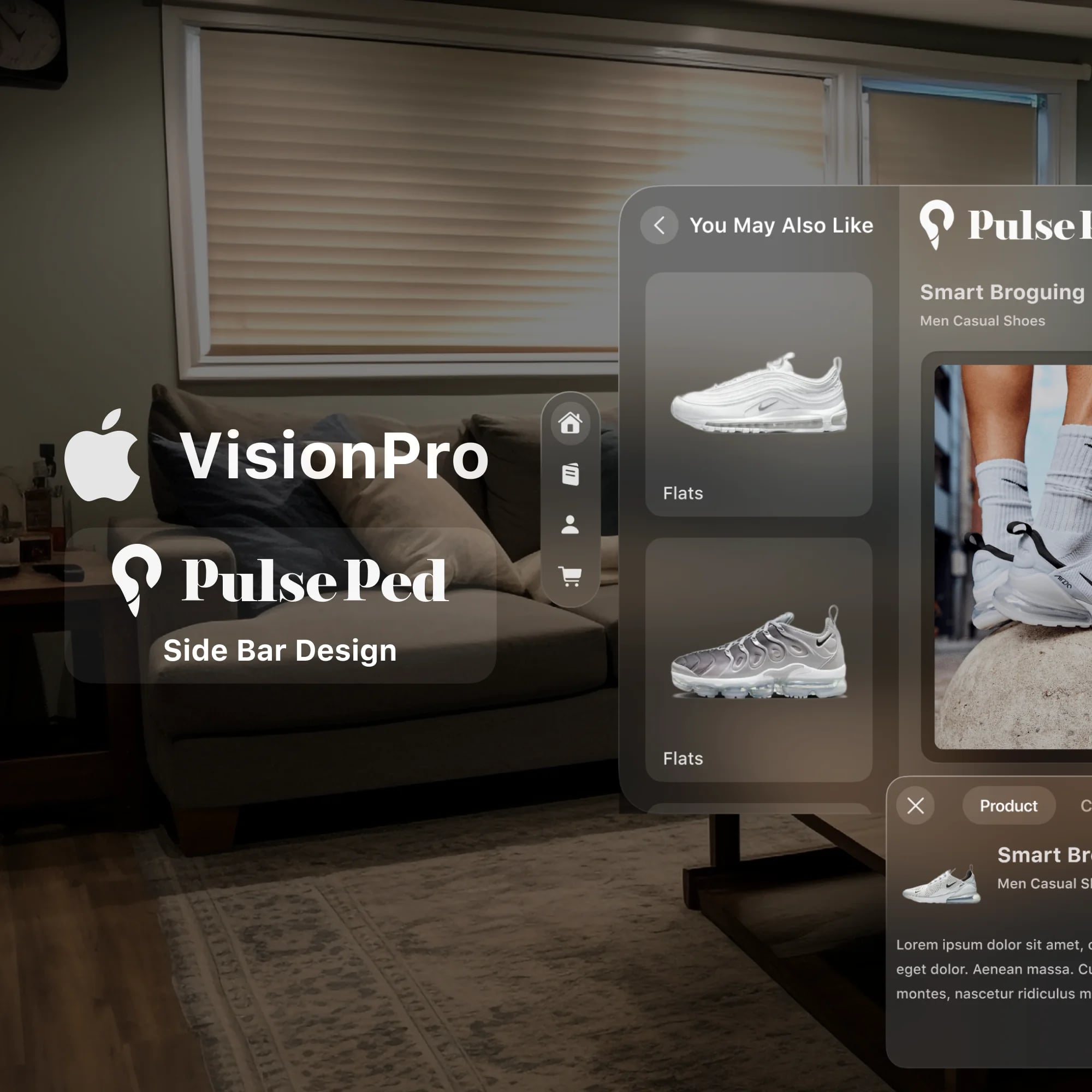
Reimagined online shopping as an immersive spatial experience—bringing the tangibility of in-store retail into the future of spatial computing.
- Client
- Conceptual Project
- Year
- 2024
- Industry
- AR/VR & Spatial Computing
- Location
- Remote
The problem · 1/5
Designing e-commerce for Vision Pro presents unique challenges that don't exist in traditional 2D interface design. The key challenges were:
Translating Retail into Spatial Computing: A physical store has natural navigation cues—shelves, aisles, lighting, and the flow of spaces. In a spatial environment, these cues must be designed from scratch. The UX needed to guide users through a 3D shopping experience without the benefit of physical intuition.
Making 3D Shopping Intuitive: Vision Pro introduces new interaction paradigms—eye tracking, hand gestures, and spatial audio. The design needed to leverage these inputs naturally, without requiring users to learn complex new controls.
Building Trust in a New Medium: Shopping online already requires trust—entering payment details, believing product photos are accurate. In a spatial environment, users need to trust that what they see in 3D is what they'll receive.
Balancing Immersion with Efficiency: While immersion is the appeal of Vision Pro, users still want to find products quickly. The design needed to offer both—immersive exploration for browsers, and fast paths for users who know what they want.
Designing for Depth and Space: In 2D interfaces, hierarchy is created through size, color, and position. In spatial computing, depth, scale, and physical placement add entirely new dimensions to consider. The design needed to use these tools intentionally.
Demonstrating Technical Feasibility: As a concept, the design needed to be ambitious enough to inspire, but grounded enough to be buildable. It had to show what's possible while remaining practical.
Key features · 2/5
Spatial Product Browsing
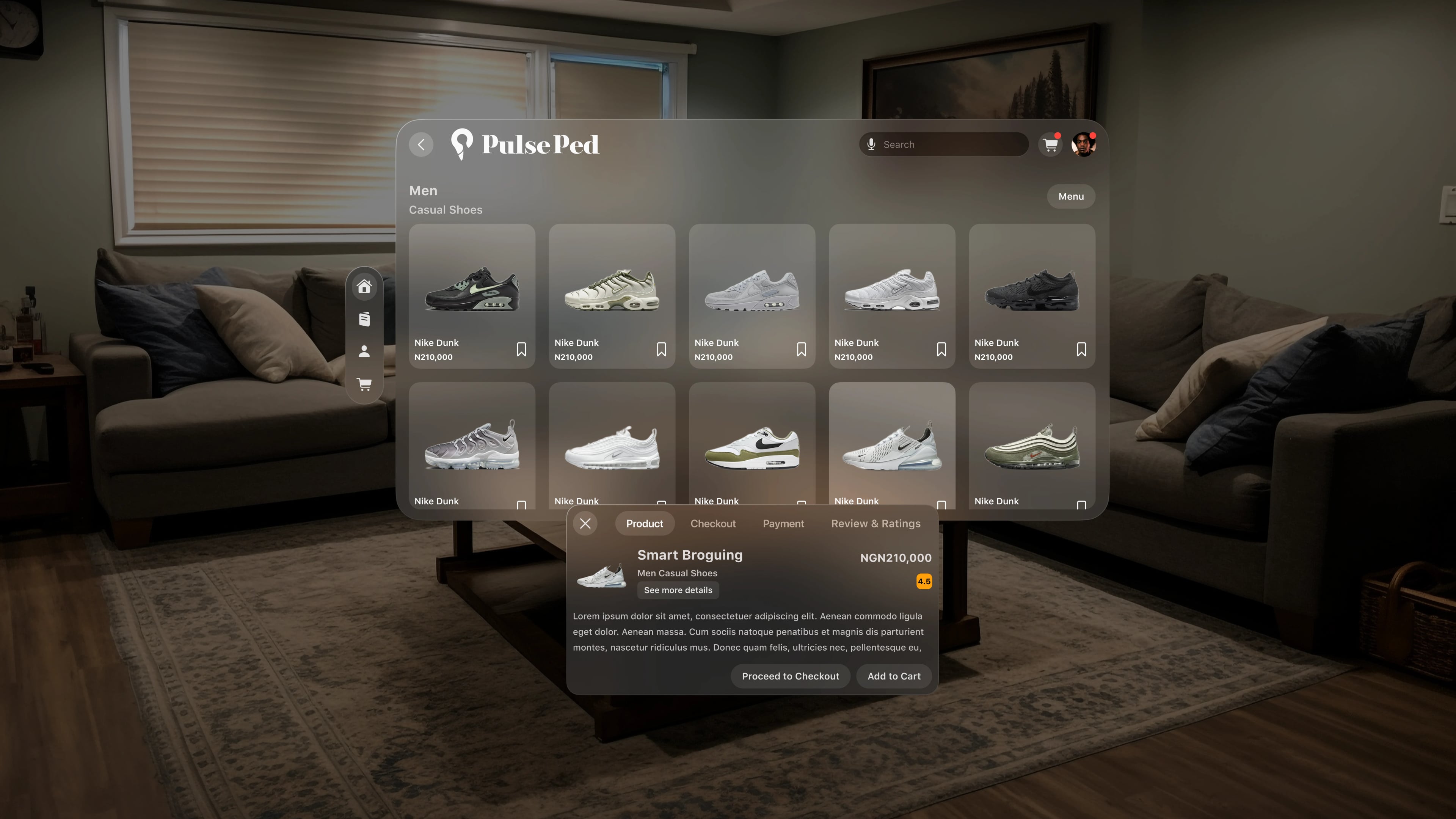
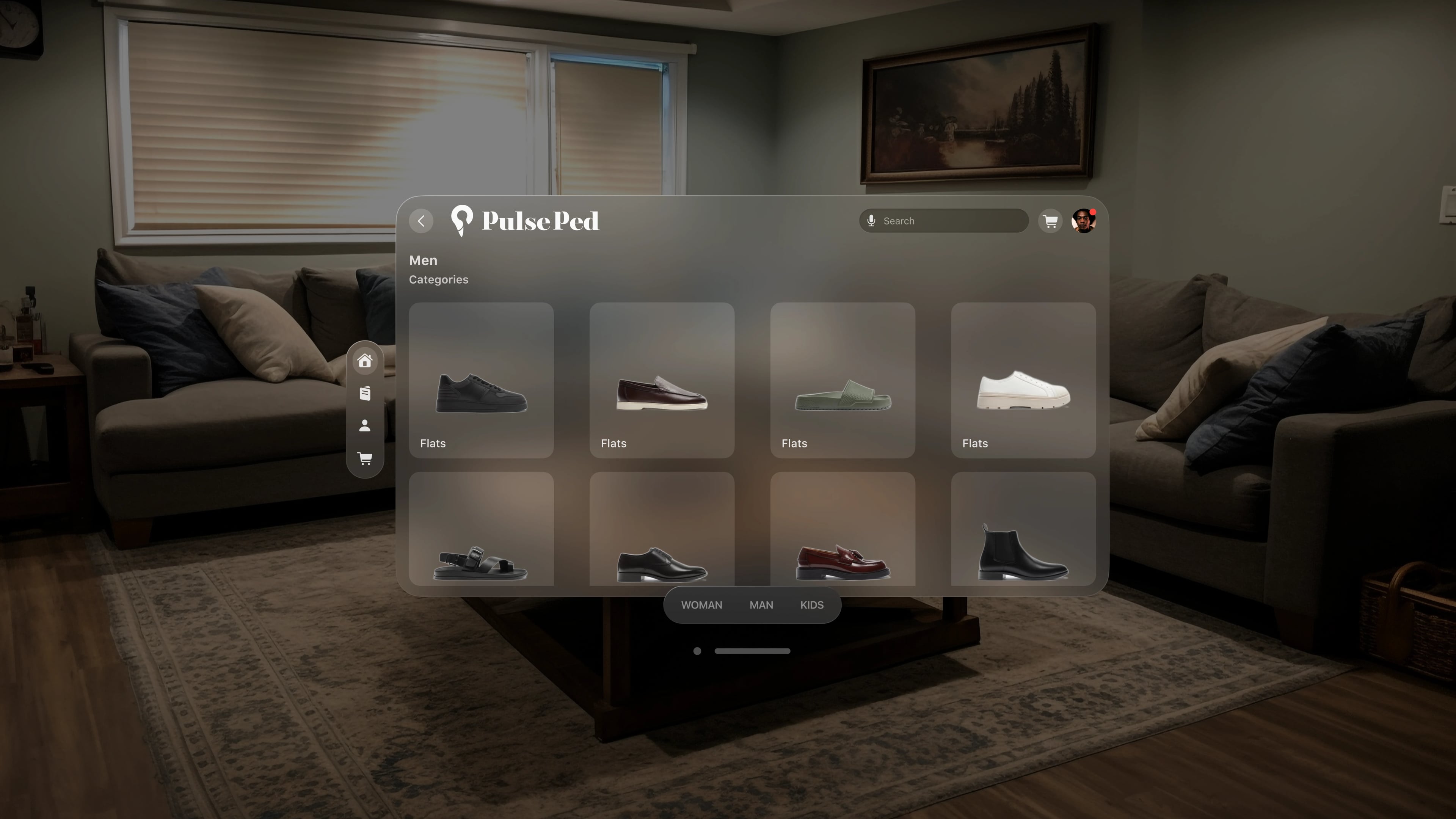
A 3D interface where products float in the user's environment, with depth and scale used to create natural visual hierarchy and intuitive exploration.
Gesture-Based Navigation
Designed for Vision Pro's eye tracking and hand controls—pinch to select, swipe to browse, and gaze to focus—making navigation feel effortless and natural.
Life-Size Product Previews
Users can walk around products, view them from any angle, and see life-size previews—bridging the gap between online convenience and in-store tangibility.
Key features (cont.) · 3/5
Real-Time Customization
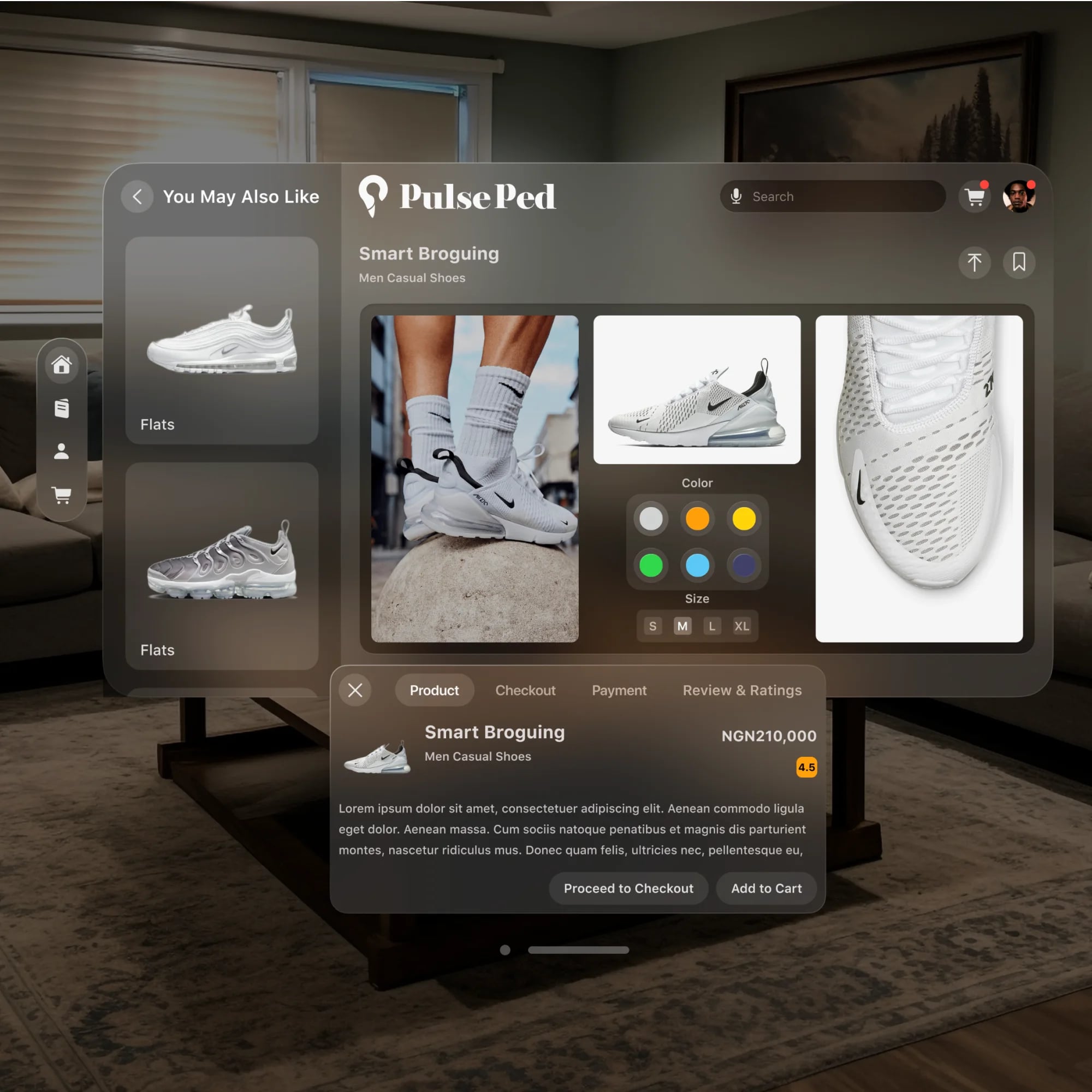
Product options—colors, sizes, and configurations—update instantly in 3D, allowing users to visualize their choices before purchasing.
"Place in Your Space" Feature
An augmented reality-style feature that lets users place products in their actual environment to see how they look and fit before buying.
Streamlined Spatial Checkout
A checkout flow adapted for Vision Pro—gesture-based confirmation, Apple Pay integration, and a clear order summary that appears naturally in the user's space.
Key features (cont.) · 4/5
Scalable Design System
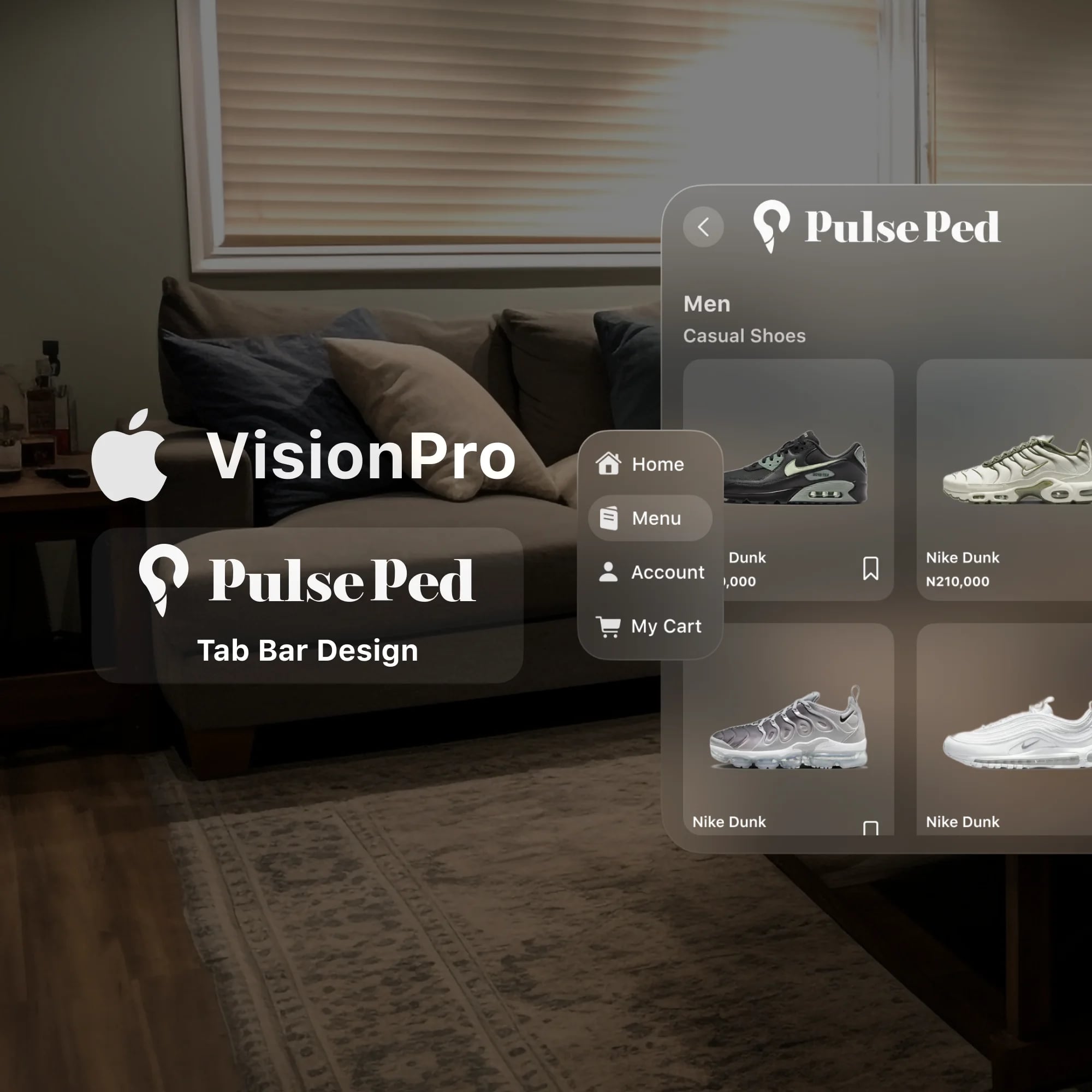
A component-based design system in Figma with consistent spatial layout principles, typography, and interaction patterns—built for future expansion.
The result · 5/5
I designed a complete Vision Pro e-commerce prototype using Figma, addressing every challenge:
Design & User Experience:
Created a spatial product browsing interface where products appear as 3D models floating in the user's environment
Designed a layout system that uses depth and scale to create natural hierarchy—featured products appear larger and closer
Implemented gesture-based navigation: pinch to select, swipe to browse, and gaze to focus
Used spatial audio cues to provide feedback and guide attention
Immersive Product Experience:
Designed product detail views where users can walk around items, view them from any angle, and see life-size previews
Included customization options—colors, sizes, and configurations—that update in real time
Added a "place in your space" feature that lets users visualize products in their actual environment
Streamlined Checkout:
Adapted the checkout flow for spatial computing, using gesture-based confirmation and Apple Pay integration
Designed a clear order summary and receipt view that appears in the user's space
Included trust signals—security badges, return policies, and reviews—adapted for 3D presentation
Visual Design:
Clean, minimal aesthetic that leverages the transparency and depth of Vision Pro
Used light and shadow to create a sense of physical presence for digital products
Consistent typography and spacing optimized for spatial readability
Prototyping & Handoff:
Created interactive Figma prototypes demonstrating the spatial flow
Documented interaction patterns and spatial layout principles
Designed with developer feasibility in mind—organized components and clear specifications
Video
Figma
Gallery
Related work